

April 21, 2012
Otisabi...Finally a TV series
Firm Stand | Politically and Economically
 Recently, Ali Babacan[1], Deputy Prime Minister for Economic and Financial Affairs ,Republic of Turkey was at a meeting at the U.S. think-tank Atlantic Council in Washington. Mavi Boncuk | Turkey's deputy prime minister said on Friday that Turkey would not join political meetings to be hosted by the Greek Cypriots when the Greek Cypriot administration took over the rotating presidency of the European Union (EU).
Ali Babacan said Turkey would maintain its relations with the EU in technical level during the Greek Cypriot presidency of the EU. "However, we will not join political meetings to be hosted by the Greek Cypriots." Babacan said during a meeting at the U.S. think-tank Atlantic Council in Washington.
On Euro zone financial crisis, Babacan said European countries should keep their commitments to overcome the financial crisis.
"2012 will be a test year for the Euro zone," he said. Babacan said the inflation in Turkey was slightly over country's expectations, and the current accounts deficit was also high. "We decided to maintain firm financial policies in order to have a sustainable economic growth," Babacan also said.
Introduction by: Lt. Gen. Brent Scowcroft, USAF (ret.) Chairman, International Advisory Board Council
Moderated by: Frederick Kempe President and CEO, Atlantic Council
DATE: Friday, April 20, 2012 | TIME: 5:00 p.m. – 6:00 p.m.
LOCATION: The Ritz-Carlton Hotel, 1150 22nd Street, NW, Washington, DC 20037
Turkey's Perspectives on the G-20 and Global Finance
Video streaming by Ustream [1] Ali Babacan has served as the Republic of Turkey’s deputy prime minister responsible for economic and financial affairs since May 2009. He launched his political career in 2001 by co-founding Turkey’s Justice and Development Party and was elected to Parliament the following year. In 2002, he was appointed minister of treasury, and recently served as minister of foreign affairs before Prime Minister Erdoğan named him deputy prime minister. Mr. Babacan was Turkey’s chief negotiator during the country’s EU accession negotiations in 2005. He holds a degree in industrial engineering from the Middle East Technical University, as well as an MBA from Northwestern University’s Kellogg School of Management. Featuring
April 19, 2012
Documentary Film | DER MÜLL IM GARTEN EDEN
 Mavi Boncuk |Fatih AKIN DER MÜLL IM GARTEN EDEN
(POLLUTING PARADISE) 1h25
Mavi Boncuk |Fatih AKIN DER MÜLL IM GARTEN EDEN
(POLLUTING PARADISE) 1h25
Ten years ago it was decided to dump waste in the hills above the Black Sea village of Camburnu. The villagers' struggle against the Turkish state has lasted as long - the mayor and the whole village against Ministers of State, judges and financial interests.
How can they possibly succeed against these powerful institutions?
Official Site
Contact: corazón international GmbH & Co KG
Ditmar-Koel-Str. 26
D-20459 Hamburg
Tel: +49 - 40 - 311 82 38 - 0
Fax: +49 - 40 - 311 82 38 - 21
amt@corazon-int.de
http://www.corazon-int.de
Ditmar-Koel-Str. 26
D-20459 Hamburg
Tel: +49 - 40 - 311 82 38 - 0
Fax: +49 - 40 - 311 82 38 - 21
amt@corazon-int.de
http://www.corazon-int.de
Cannes 2012 | Fatih Akin's Documentary 'Der Mull im Garten Eden'
 The lineup for the 2012 Festival de Cannes is set. The roster was unveiled today at a morning press conference in Paris. Wes Anderson's Moonrise Kingdom will open the festival on May 16th, while the final film by the late Claude Miller will close the event on May 27th. Starring Audrey Tatou in the title role, Thérèse Desqueyroux will conclude this year's fest with a tribute to the director who died earlier this month. Italian filmmaker Nanni Moretti will be the president of the feature competition jury this year.
 Mavi Boncuk | ‘Der Mull im Garten Eden’ (Polluting Paradise) by Fatih Akin – Villagers in Turkey’s Black Sea village of Camburnu struggle with the government’s decision to turn their community into a garbage dump.
Big, Fat Juicy Döner Kebab at die Dönerbude

SEE WSJ ARTICLE FROM MAVI BONCUK ARCHIVES
A version developed to suit German tastes by Turkish immigrants in Berlin has become one of Germany's most popular fast food dishes. Annual sales in Germany amount to 2.5 billion euros.Veal and chicken are widely used instead of lamb, particularly by vendors with large ethnic German customer bases, for whom lamb is traditionally less preferred.
Typically, along with the meat, a salad consisting of chopped lettuce, cabbage, onions, cucumber, and tomatoes is offered, as well as a choice of sauces—hot sauce (scharfe Soße), herb sauce (Kräutersoße), garlic sauce (Knoblauchsoße), or yogurt (Joghurtsoße). The filling is served in thick flatbread (Fladenbrot) that is usually toasted or warmed. There are different variations on the döner kebab, one of which is kebab mit pommes. This is similar to an ordinary döner kebab, except that it has French fries instead of the salad. Another variety is achieved by placing the ingredients on a lahmacun (a flat round dough topped with minced meat and spices) and then rolling the ingredients inside the dough into a tube that is eaten out of a wrapping of usually aluminum foil (Türkische Pizza). When plain dough is used (without the typical Lahmacun spices and minced meat) the rolled kebab is called "dürüm döner" or "döner yufka."
Tarkan Tasyumruk, president of the Association of Turkish Doner Producers in Europe (ATDID), provided information in 2010 that, every day, more than 400 tonnes of döner kebab meat is produced in Germany by around 350 firms. At the same ATDID fair, Tasyumruk stated that 'Annual sales in Germany amount to 2.5 billion euros. That shows we are one of the biggest fast-foods in Germany'. In many cities throughout Germany, "Döner" (as it is usually called) is at least as popular as hamburgers or sausages, especially with young people.
Germany's large Turkish minority is probably the biggest reason for the widespread sale of döner kebab sandwiches there: from the late 60s on, large numbers of Turks were invited to come to Germany as guest workers, to fill a then acute labour shortage caused by the Wirtschaftswunder after the war. Most of these Turkish workers eventually stayed in Germany, and opening small food shops and takeaways was an excellent option in terms of progressing from more menial jobs. The link between Turks and döner kebab shops in Germany is so strong that the wave of neo-Nazi murders of immigrants that took place there in 2000-2006 was dubbed the "döner murders" by the German press.
April 15, 2012
The interests of The United States throughout the Ottoman Empire
Mavi Boncuk |
 On the whole, the interests of the United States throughout the Ottoman Empire were peculiar, in that the majority of the complaints related to personal, as distinct from commercial, rights. I have said in an earlier chapter that some of the questions at issue, especially those involving extraterritoriality, grew out of capitulations dating back over four hundred years, to the conquest of Constantinople by the Moslems in 1453. The terms of these capitulations or "privileges" were made originally between the Greeks and the various Italian[87] city republics—Pisa, Genoa, Venice. The Moslems later embodied them in revised capitulations with France in 1535, 1604, 1673, and 1740; with England in 1583 and 1675; with Holland in 1680; with Austria in 1718; and with Russia in 1783. On these later European capitulations was based our own first treaty with the Sublime Porte in 1830. Practically speaking, therefore, consular jurisdiction in Turkey was then not very different from what it was in the fifteenth century.
When I took office one of the vexatious questions to be settled was the interpretation of Clause IV of the Treaty of 1830. This treaty was negotiated by Charles Rhind, as American commissioner, with Reis Effendi, Turkish representative. Rhind had prepared it, with the help of dragoman Navoni, in French and in Turkish, and when it was finally drawn up, according to Rhind's own report, Reis Effendi "signed and sealed the treaty in Turkish and I did the same with the French translation, and we exchanged them." Thereupon the original Turkish version, together with a copy of the French translation as signed by the American commissioners—President Jackson had appointed Captain James Biddle and David Offley together with Rhind—and several English translations were transmitted to Washington. The treaty actually approved by the Senate was one of the English versions.
Before the ratifications were exchanged the American chargé d'affaires at Constantinople, David Porter, received word that the French version was not exactly in agreement with the Turkish. Porter's simple method of correcting this discrepancy was to sign a document, also in the Turkish language, accepting the Turkish version of the treaty without reserve; and when the translation of this document reached Washington nothing further was said.
Indeed, the treaty rested in peace until 1868, when the American minister, acting according to the English version, clashed with the Turkish authorities in the interpretation of Clause IV, regarding jurisdiction over American citizens—in this case two who had been arrested and imprisoned for alleged offenses against the Turkish Government. The English version read:
Citizens of the United States of America, quietly pursuing their commerce, and not being charged or convicted of any crime or offence, shall not be molested; and even when they may have committed some offence they shall not be arrested and put in prison, by the local authorities, but they shall be tried by their Minister or Consul, and punished according to their offence, following, in this respect, the usage observed towards other Franks.
When our Government proceeded to obtain exact translations of this clause, it was found that the Turkish version did not contain the words "arrested" or "tried," although the phraseology made clear that American citizens were not to be imprisoned in Turkish prisons, but punished through their minister or consul. Consequently, the Turkish authorities could arrest but not imprison, could try but not inflict punishment.
The Turkish Government would not recognize as accurate any of the translations the United States presented. When asked to present a translation of its own, however, the matter was gradually put in abeyance.
Under Four Administrations, From Cleveland to Taft by Oscar S. Straus (Dec. 23, 1850-May 3, 1926) Presidential Cabinet Secretary, US Diplomat. Served as United States Minister to Turkey
 On the whole, the interests of the United States throughout the Ottoman Empire were peculiar, in that the majority of the complaints related to personal, as distinct from commercial, rights. I have said in an earlier chapter that some of the questions at issue, especially those involving extraterritoriality, grew out of capitulations dating back over four hundred years, to the conquest of Constantinople by the Moslems in 1453. The terms of these capitulations or "privileges" were made originally between the Greeks and the various Italian[87] city republics—Pisa, Genoa, Venice. The Moslems later embodied them in revised capitulations with France in 1535, 1604, 1673, and 1740; with England in 1583 and 1675; with Holland in 1680; with Austria in 1718; and with Russia in 1783. On these later European capitulations was based our own first treaty with the Sublime Porte in 1830. Practically speaking, therefore, consular jurisdiction in Turkey was then not very different from what it was in the fifteenth century.
When I took office one of the vexatious questions to be settled was the interpretation of Clause IV of the Treaty of 1830. This treaty was negotiated by Charles Rhind, as American commissioner, with Reis Effendi, Turkish representative. Rhind had prepared it, with the help of dragoman Navoni, in French and in Turkish, and when it was finally drawn up, according to Rhind's own report, Reis Effendi "signed and sealed the treaty in Turkish and I did the same with the French translation, and we exchanged them." Thereupon the original Turkish version, together with a copy of the French translation as signed by the American commissioners—President Jackson had appointed Captain James Biddle and David Offley together with Rhind—and several English translations were transmitted to Washington. The treaty actually approved by the Senate was one of the English versions.
Before the ratifications were exchanged the American chargé d'affaires at Constantinople, David Porter, received word that the French version was not exactly in agreement with the Turkish. Porter's simple method of correcting this discrepancy was to sign a document, also in the Turkish language, accepting the Turkish version of the treaty without reserve; and when the translation of this document reached Washington nothing further was said.
Indeed, the treaty rested in peace until 1868, when the American minister, acting according to the English version, clashed with the Turkish authorities in the interpretation of Clause IV, regarding jurisdiction over American citizens—in this case two who had been arrested and imprisoned for alleged offenses against the Turkish Government. The English version read:
Citizens of the United States of America, quietly pursuing their commerce, and not being charged or convicted of any crime or offence, shall not be molested; and even when they may have committed some offence they shall not be arrested and put in prison, by the local authorities, but they shall be tried by their Minister or Consul, and punished according to their offence, following, in this respect, the usage observed towards other Franks.
When our Government proceeded to obtain exact translations of this clause, it was found that the Turkish version did not contain the words "arrested" or "tried," although the phraseology made clear that American citizens were not to be imprisoned in Turkish prisons, but punished through their minister or consul. Consequently, the Turkish authorities could arrest but not imprison, could try but not inflict punishment.
The Turkish Government would not recognize as accurate any of the translations the United States presented. When asked to present a translation of its own, however, the matter was gradually put in abeyance.
Under Four Administrations, From Cleveland to Taft by Oscar S. Straus (Dec. 23, 1850-May 3, 1926) Presidential Cabinet Secretary, US Diplomat. Served as United States Minister to Turkey
Ottoman Ambassador to US | Grégoire d’Aristarchi Bey
Mavi Boncuk |
Grégoire d’Aristarchi Bey (14.10.1873-29.03.1883)
 Grégoire Aristarchis, also known as Aristarchi Bey, (died 1915) was an Ottoman diplomat of Greek ethnicity, author of a corpus of Ottoman Legislation. He served as Ottoman Minister in Washington from 1873 to 1883 with Alexandre Mavroyeni Bey. After 1883 he lived in Paris where he worked as advisor by Alfred Nobel.[*] After the fall of Abdul Hamid II he served as an Ottoman diplomat to the Netherlands where he died. He composed one of the first collections of the Ottoman Law[**] in 7 volumes in French language
[*] Mémoires d'Aristarchi-Bey (Démétrius).Imprimereie Daloux, 1888
[**] Grégoire ARISTARCHI BEY: Législation ottomane, ou Recueil des lois, règlements, ordonnances, traités, capitulations et autres documents officiels de l'Empire Ottoman. Vol. I: Droit privé: législation relative au droit civil commun, droit de la propriété foncière et droit commercial et maritime. NICOLAÏDES (Démétrius), éd. Constantinople: Imprimeries Frères NICOLAÏDES, 1873. XXX-427 p., 20 cm.
 Harvard law Library has a copy of "L'Angleterre, les États-Unis et le Vénézuela', a 16 page pamphlet by Grégoire Aristarchi that carries his signature.
Grégoire d’Aristarchi Bey (14.10.1873-29.03.1883)

[*] Mémoires d'Aristarchi-Bey (Démétrius).Imprimereie Daloux, 1888
[**] Grégoire ARISTARCHI BEY: Législation ottomane, ou Recueil des lois, règlements, ordonnances, traités, capitulations et autres documents officiels de l'Empire Ottoman. Vol. I: Droit privé: législation relative au droit civil commun, droit de la propriété foncière et droit commercial et maritime. NICOLAÏDES (Démétrius), éd. Constantinople: Imprimeries Frères NICOLAÏDES, 1873. XXX-427 p., 20 cm.

!5 million Apples for Turkey
Kudos to Turkey for willing to supply its kids with modern technology from the get-go. Yet another nail in the printed book coffin.

Mavi Boncuk |
Bloomberg reports that Apple is among the companies considering making a bid to provide as many as 15 million tablet devices to Turkish schoolchildren over the next four years. Microsoft and Intel are also said to be interested in bidding on the project. Government officials had previously indicated that the tablets themselves must also be produced in Turkey.
Apple officials told [Turkish Trade Minister Zafer] Caglayan during his visit to the U.S. that the Cupertino, California-based maker of smart devices may also decide to use some Turkish manufacturers to make some peripheral equipment such as covers, earphones for its iPad and iPhone models but that might not be enough.
Not that the country doesn't have a burgeoning electronics industry, including home brands that are sold across Europe and Asia, but producing iPads there might be a tough sell as far as Apple is concerned. A Microsoft team is rumored to be visiting Turkey to discuss the project, called Fatih. Intel could also chip in, by a suggested opening of an R&D center in Turkey.
Graveyards Returned to İstanbul’s Jewish, Greek and Armenian Communities
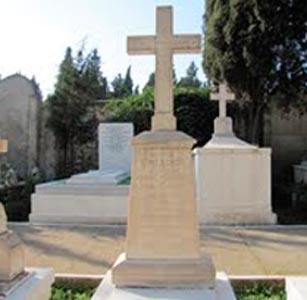 Mavi Boncuk | Six historic graveyards were returned to İstanbul’s Jewish, Greek and Armenian communities on Thursday, following a decision by a government board that regulates the practices of the country’s non-Muslim communities.
The decision of the Directorate General for Foundations (VGM) to restore the cemeteries to their respective minority communities is the first ruling on a February application by 19 non-Muslim foundations for the return of 57 historic properties.
In September, the government authorized the return of properties seized from non-Muslim religious communities in decades past.
Thursday’s VGM ruling saw the return of two cemeteries to the Beyoğlu Yüksek Kaldırım Ashkenazi Jewish Synagogue Foundation, as well as the repatriation of cemeteries belonging to the Beyoğlu Greek Orthodox Churches and Schools Foundation, the Balat Surp Hreştegabet Armenian Church and School Foundation, the Kadıköy Hemdat Israel Synagogue Foundation and the Kuzguncuk Beit Yaakov Ashkenazi Synagogue Foundation.
Laki Vingas, the representative of non-Muslim foundations at the VGM, told the Radikal Daily on Thursday that the decision is a sign that the minority property law passed in September is being acted upon by the government. This week, US Secretary of State Hillary Clinton told the US Congress that she was encouraged by the “concrete steps Turkey has taken over the past year to return properties to religious communities.” Turkey’s mostly Muslim population of nearly 75 million includes roughly 65,000 Armenian Orthodox Christians, 20,000 Jews, 15,000 Assyrians and about 3,500 Greek Orthodox Christians. While Armenian groups have 52 foundations and Jewish groups 17, Greeks have 75. Some of the properties that were seized from those foundations include schools and cemeteries.